
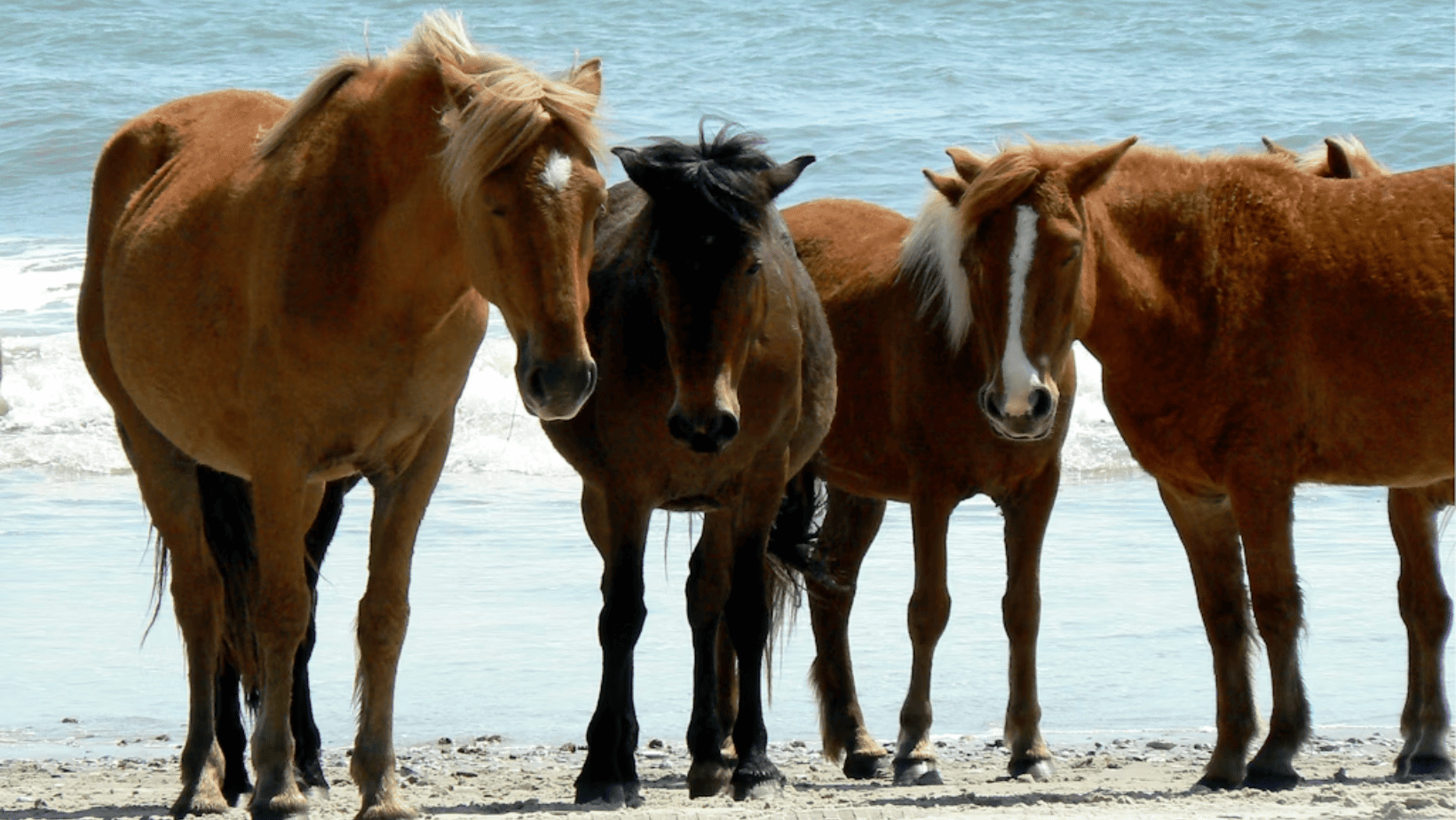
The story of the Corolla Mustangs is a fascinating tale.
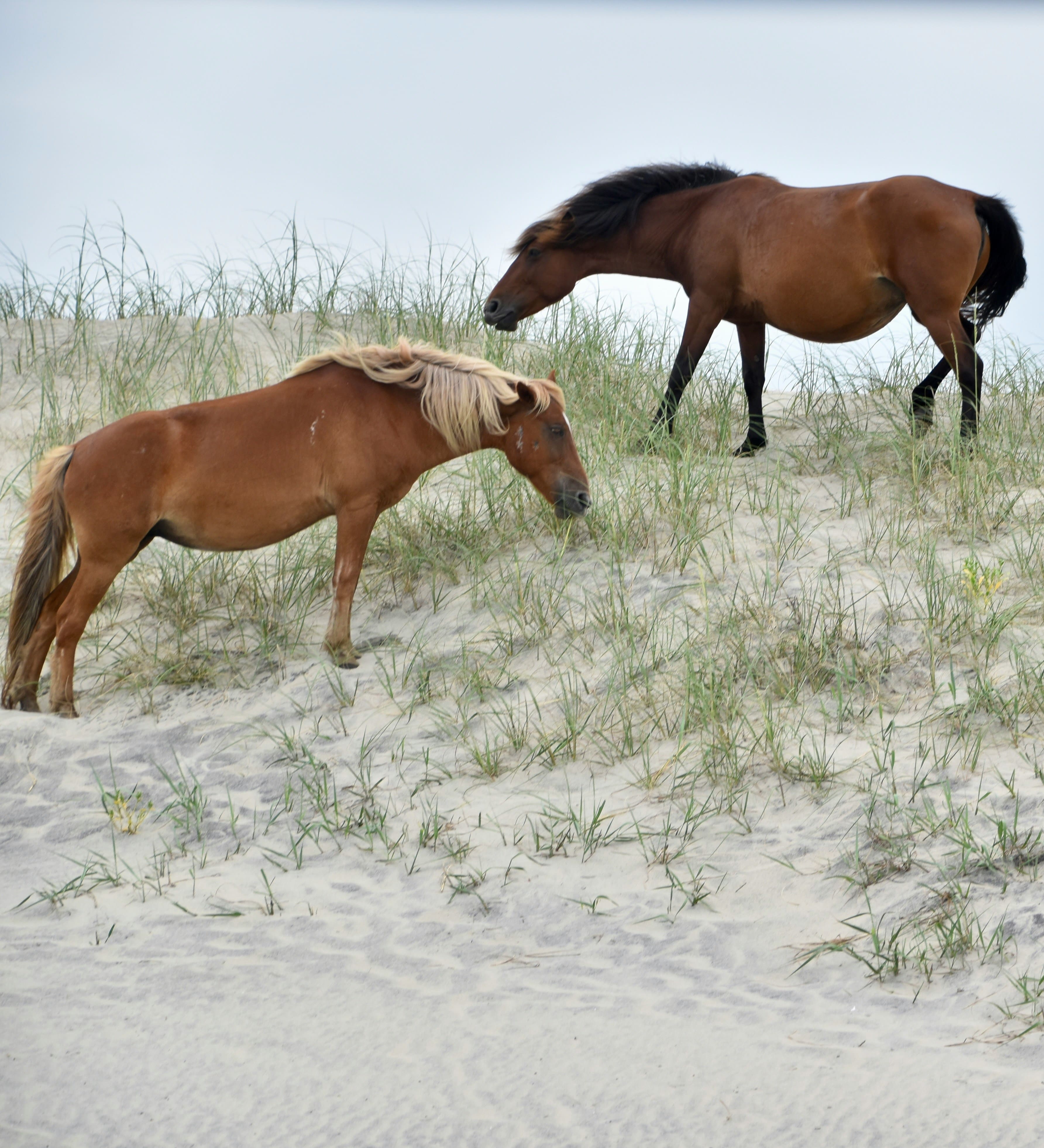
If you’ve ever visited the Outer Banks of North Carolina, you may have heard about, or even caught a glimpse of, the famous wild horses roaming the beaches of Corolla. Seeing horses walking along the shoreline or grazing in the dunes feels almost surreal. But how did these animals end up here in the first place?
The story of the Corolla Mustangs is a fascinating blend of history, survival, and legend that stretches back hundreds of years.
Why Are There Wild Horses in the Outer Banks? The Story of the Corolla Mustangs
The Spanish Origins
The most widely accepted theory is that the wild horses of the Outer Banks are descendants of Spanish mustangs brought to North America in the 16th century. Spanish explorers traveling along the coast likely transported horses on their ships.
Over time, some of these ships wrecked along the treacherous waters of the Outer Banks, an area often called the “Graveyard of the Atlantic.” It’s believed that surviving horses made it to shore and adapted to their new environment, eventually forming the herds we see today.
Built for Survival
Life on the Outer Banks isn’t easy. The environment is harsh, with strong winds, saltwater exposure, intense heat, and limited fresh water. Yet the Corolla Mustangs have adapted remarkably well.
These horses have developed unique traits that help them survive, including:
- A stocky build suited for endurance
- The ability to drink slightly brackish water
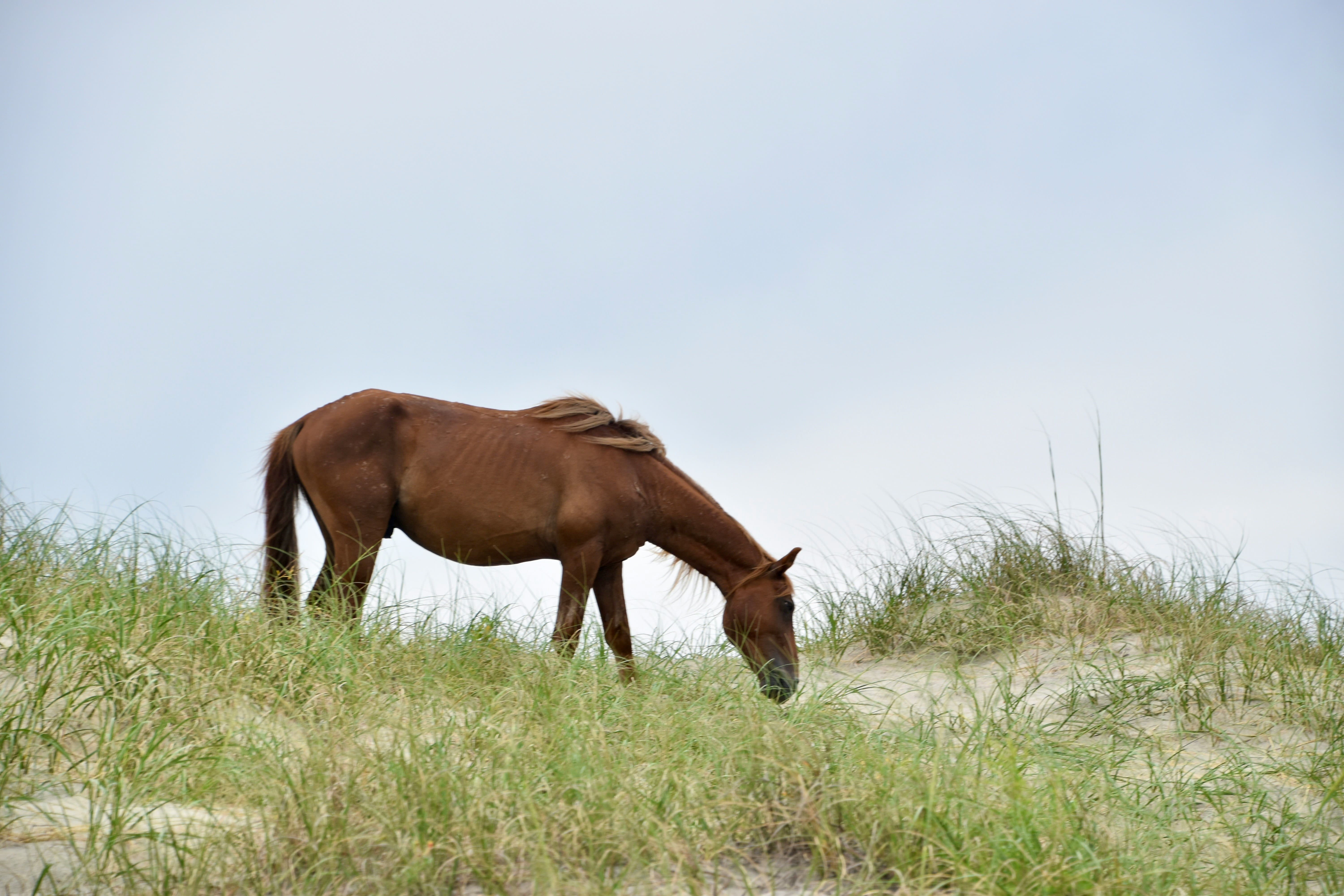
- Diets that include sea oats and coastal grasses
They’re smaller than many modern horse breeds, but incredibly tough, living proof of generations of natural adaptation.
Protected but Still Wild
Today, the Corolla Mustangs are protected and managed by organizations like the Corolla Wild Horse Fund. While they roam freely across designated areas north of Corolla, their population is carefully monitored to ensure long-term survival.
Visitors are reminded that:
- These horses are truly wild and should not be approached
- Feeding them is illegal and harmful to their health
- A safe distance (at least 50 feet) must always be maintained
This balance allows people to appreciate their presence while preserving their natural behavior.
“Abandoned by the Spanish, thousands of mustangs ran wild into the open plains that resembled so closely their ancestral Iberian lands.” — S.C. Gwynne
Living Pieces of History
What makes these horses especially unique is that they are not just wildlife, they’re living history. The Corolla Mustangs are considered one of the last remaining groups of Colonial Spanish horses in the United States.
Their lineage connects directly to early exploration and settlement in North America, making them culturally and historically significant.
Seeing them isn’t just a wildlife encounter, it’s like stepping back in time.
Where You Can Find Them
The horses primarily live in the northernmost beaches of the Outer Banks, in areas only accessible by four-wheel-drive vehicles. This remote setting has helped protect them from overdevelopment and keeps their habitat relatively undisturbed.
If you’re hoping to see them, locals recommend:
- Visiting early in the morning or late in the afternoon
- Joining a guided wild horse tour
- Being patient and respectful of their space
Encounters are never guaranteed, but that’s part of what makes them special.
Why They Matter
The Corolla Mustangs represent resilience, history, and the delicate balance between nature and human interaction. Their continued survival depends on responsible tourism, conservation efforts, and public awareness.
They’re not just an attraction, they’re a symbol of the Outer Banks’ wild and untamed spirit.
Final Thoughts
The presence of wild horses in the Outer Banks isn’t a mystery once you understand their origins, but it never stops feeling magical. From shipwreck survival to centuries of adaptation, the Corolla Mustangs have carved out a life in one of the most unique coastal environments in the country.
For many visitors, seeing them is a highlight of their trip. And once you witness them moving freely along the dunes, it’s easy to understand why their story continues to capture people’s imagination. It is worth staying in a vacation rental in the area just watch them.
If you love wildlife, you will love the mustangs of Corolla.